
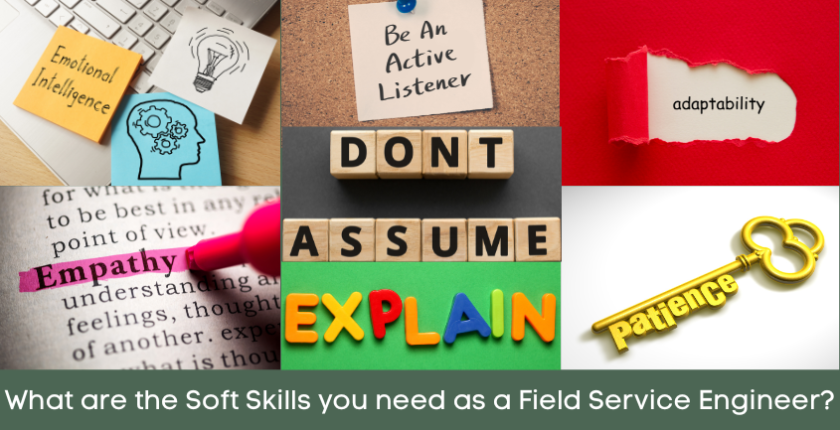
What are the Soft Skills you need as a Field Service Engineer?
A field service engineer is often in the position of being their company’s representative or ‘face’ when on a client’s site. So, soft skills are vital even though a field service engineer is a technical role. This article looks at the soft skills needed by someone working as a field service engineer and also serves as a guide for anyone transitioning into field service to help with applications and interviews.
The key Soft Skills for Field Service Engineers
Introduction
A field service engineer works at the point where technical expertise meets the customer experience. When attending a client site, the engineer is often seen as the representative of the organisation as a whole rather than just an individual technician. This means that behaviour, communication and attitude are judged just as closely as technical ability. While strong technical knowledge is essential it is soft skills that shape how customers feel about the service they receive and whether they trust the company in the long term.
In an environment where customers expect professionalism clarity and respect at every interaction, soft skills are no longer optional. They are a core part of effective performance for any field service engineer.
Soft skills needed
Soft skills refer to personal and interpersonal abilities that influence how someone works with others and responds to different situations. For a field service engineer these skills are critical because the role involves working independently managing time on site and dealing directly with customers who may be under pressure or experiencing operational issues.
Unlike technical skills soft skills are applied constantly. They affect first impressions ongoing communication problem resolution and the overall relationship between the customer and the organisation.
Emotional intelligence
Emotional intelligence is the ability to recognise manage and respond appropriately to emotions both your own and those of others. A field service engineer may encounter customers who are stressed frustrated or anxious due to equipment failure or downtime.
By remaining aware of emotional cues and responding calmly and professionally the engineer can reduce tension and build trust. Emotional intelligence allows the engineer to adjust their tone approach and communication style to suit the situation which helps maintain a positive working relationship even when problems are complex.
Adaptability
No two client sites are the same. A field service engineer may face unexpected technical challenges changes in schedule or different working environments. Adaptability enables the engineer to respond effectively without becoming overwhelmed or defensive.
An adaptable engineer can adjust plans priorities and communication methods as needed. This flexibility reassures customers that the engineer is capable and in control even when circumstances change.
Empathy
Empathy involves understanding the customer’s perspective and acknowledging the impact that an issue may have on their operations. Customers want to feel heard and understood not dismissed or rushed.
When a field service engineer demonstrates empathy it shows respect for the customer’s concerns. Simple actions such as acknowledging inconvenience or explaining that the issue is taken seriously can significantly improve the customer experience.
Conflict resolution
Disagreements or dissatisfaction can arise particularly when systems are down or expectations are not met. Strong conflict resolution skills allow a field service engineer to manage these situations professionally.
This involves staying calm listening carefully and focusing on solutions rather than blame. By addressing concerns clearly and respectfully the engineer can often turn a difficult interaction into a positive outcome.
Strong listening skills
Listening is one of the most important soft skills for a field service engineer. Customers often provide valuable information about symptoms history and impact of a problem.
Active listening ensures that the engineer fully understands the issue before acting. It also helps the customer feel valued and respected which strengthens the working relationship and reduces misunderstandings.
Ability to explain anything to anyone
Technical knowledge is only useful if it can be communicated clearly. A field service engineer must be able to explain complex issues in a way that suits the customer’s level of understanding.
Clear explanations help customers make informed decisions and feel confident in the service provided. This skill also reduces confusion and builds credibility.
Patience and calmness
Technical issues can take time to diagnose and resolve. Customers may ask repeated questions or express frustration. Patience and calmness are essential in maintaining professionalism throughout the visit.
By remaining composed the engineer reassures the customer and creates a stable working environment. This approach also helps prevent mistakes that can occur under pressure.
Politeness, respect and willingness to help
Professional courtesy is fundamental. Being polite showing respect and offering help where possible reflect positively on both the engineer and the organisation.
Simple behaviours such as punctuality clear communication and consideration for site rules demonstrate professionalism. Starting each interaction with a positive attitude sets the tone for a successful visit.
Soft skills improve customer satisfaction
Strong soft skills do not only benefit the individual engineer. They enhance team performance and contribute to the overall reputation of the company. Customers who feel respected and supported are more likely to remain loyal and recommend the service to others.
While technology and automation continue to advance strong customer relationships remain a human strength. Trust understanding and rapport are areas where personal interaction still matters greatly and cannot be fully replicated by AI at present.
Conclusion
A field service engineer must balance technical expertise with strong interpersonal skills. Soft skills such as emotional intelligence adaptability empathy and communication are essential for delivering high quality service.
By developing these skills engineers can improve customer satisfaction reduce conflict and represent their organisation positively. In a competitive business environment soft skills are a key differentiator and a vital part of long-term success.
Further Resources

Professional development courses in communication and customer service
Courses such as the Institute of Customer Service Professional Qualifications offer structured learning focused on customer experience communication and service excellence. Short courses from providers like City and Guilds or online platforms such as OpenLearn also offer modules on workplace communication and customer interaction that are relevant to field based roles.
Emotional intelligence and interpersonal skills training
Training programmes based on emotional intelligence frameworks such as those developed by Daniel Goleman can help engineers better understand their own behaviour and reactions. Many corporate training providers offer workshops specifically designed for technical professionals who work directly with customers.
Industry specific service training
Equipment manufacturers and service organisations often provide training that includes customer interaction scenarios alongside technical instruction. These sessions are particularly useful because they reflect real situations that field service engineers encounter on site.
Mentoring and peer learning
Shadowing experienced field service engineers or taking part in formal mentoring schemes allows less experienced engineers to observe effective communication and problem handling in practice. Regular team debriefs and knowledge sharing sessions can also help spread best practice across the organisation.
Conflict management and negotiation courses
Short courses in conflict resolution negotiation or difficult conversations can help engineers handle challenging customer interactions calmly and professionally. These are often available through professional training organisations or as part of wider leadership development programmes.
Self study through books and articles
Books on emotional intelligence customer service and professional communication provide valuable insight and practical techniques. Trade publications and professional journals related to engineering and service management also regularly publish articles on customer relations and soft skills development.
Customer feedback and reflective practice
Structured customer feedback surveys and post visit reviews can highlight strengths and areas for improvement. Encouraging engineers to reflect on feedback and discuss it with managers supports continuous improvement in both technical and soft skills.
Further information
How to move Industries when you are a Field Engineer